Help
DataGrid
How to use DataGrid Bulk Editor for ServiceM8
What is DataGrid?
DataGrid gives you a spreadsheet-style view of your ServiceM8 assets and clients in one place. No more clicking into each record one at a time. View, edit, and export the lot from a single screen, with bulk select to update multiple rows at once. Export to CSV when you need it offline.
Now on the ServiceM8 Add-on Store
DataGrid is live on the ServiceM8 Add-on Store — open the store from inside ServiceM8, search for DataGrid, and install it. It’s a paid add-on at $5.99 AUD/month, billed through ServiceM8.
Launching DataGrid
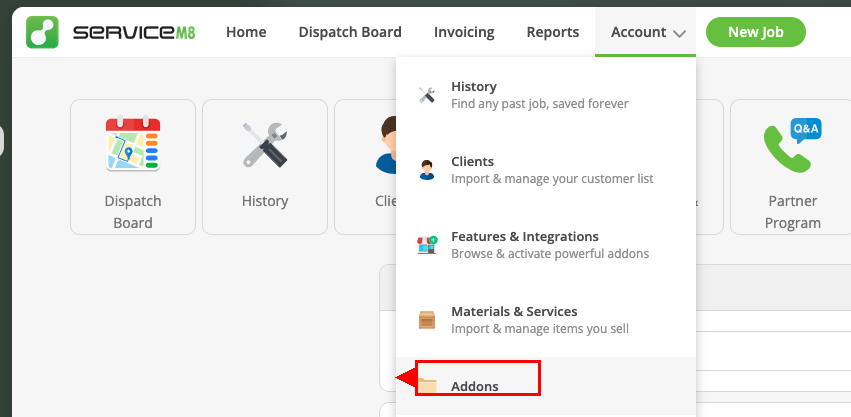
Step 1: Open the Addons page
In ServiceM8, go to Account → Addons. You'll see a list of your installed addons. Look for DataGrid Bulk Editor with the red DG icon.
Step 2: Open DataGrid
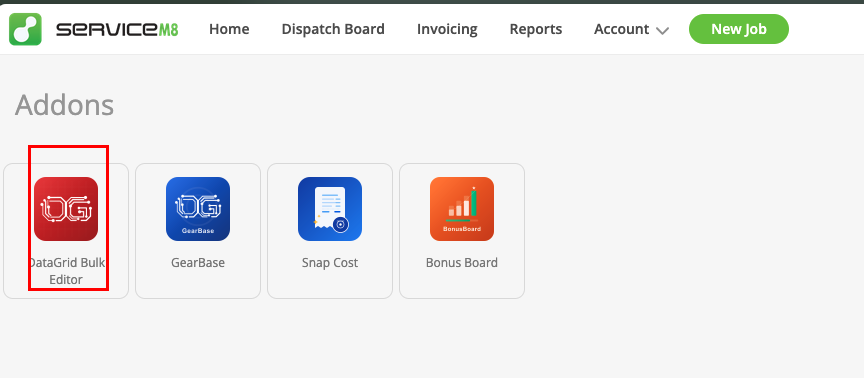
Click DataGrid Bulk Editor from the Addons page. It will open and show you the main screen.
Step 3: Choose what to manage
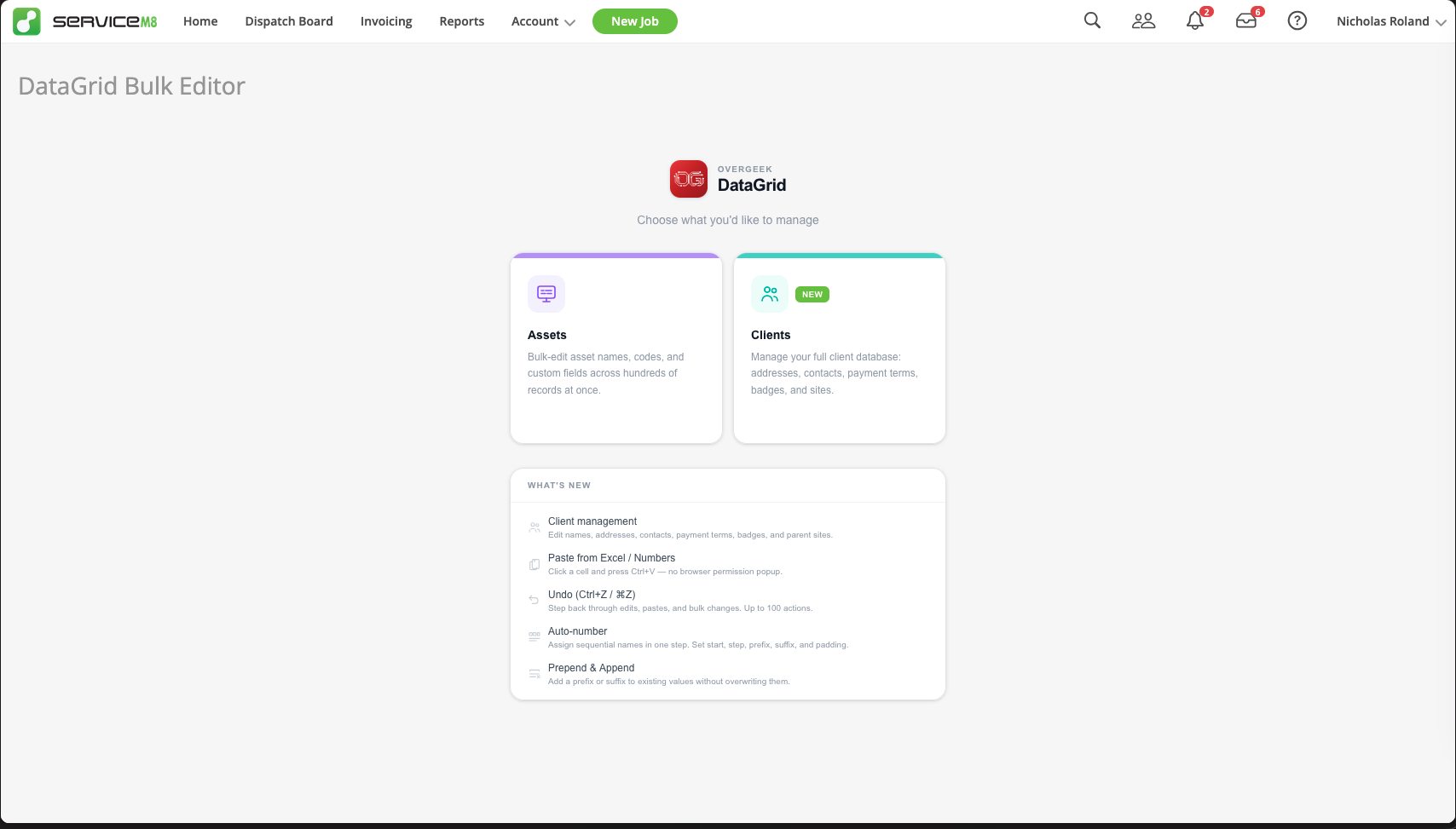
The DataGrid landing page asks what you'd like to manage. Pick Assets to bulk-edit asset names, codes, and custom fields. Pick Clients to manage your client database (addresses, contacts, payment terms, badges and more). The What's New panel below shows the latest features available.
Managing Assets
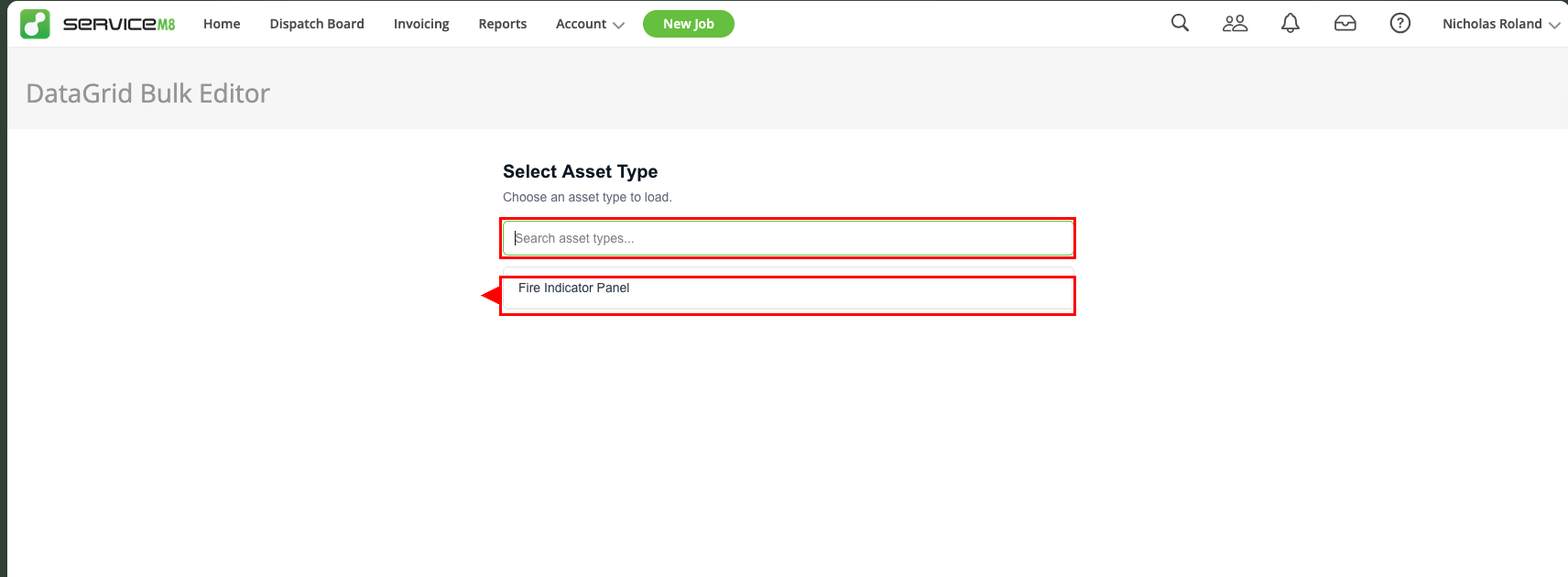
Step 1: Choose an asset type
You'll see a list of all asset types in your ServiceM8 account. Use the search bar to filter, or scroll through and click the one you want to work with.
Step 2: Select a site
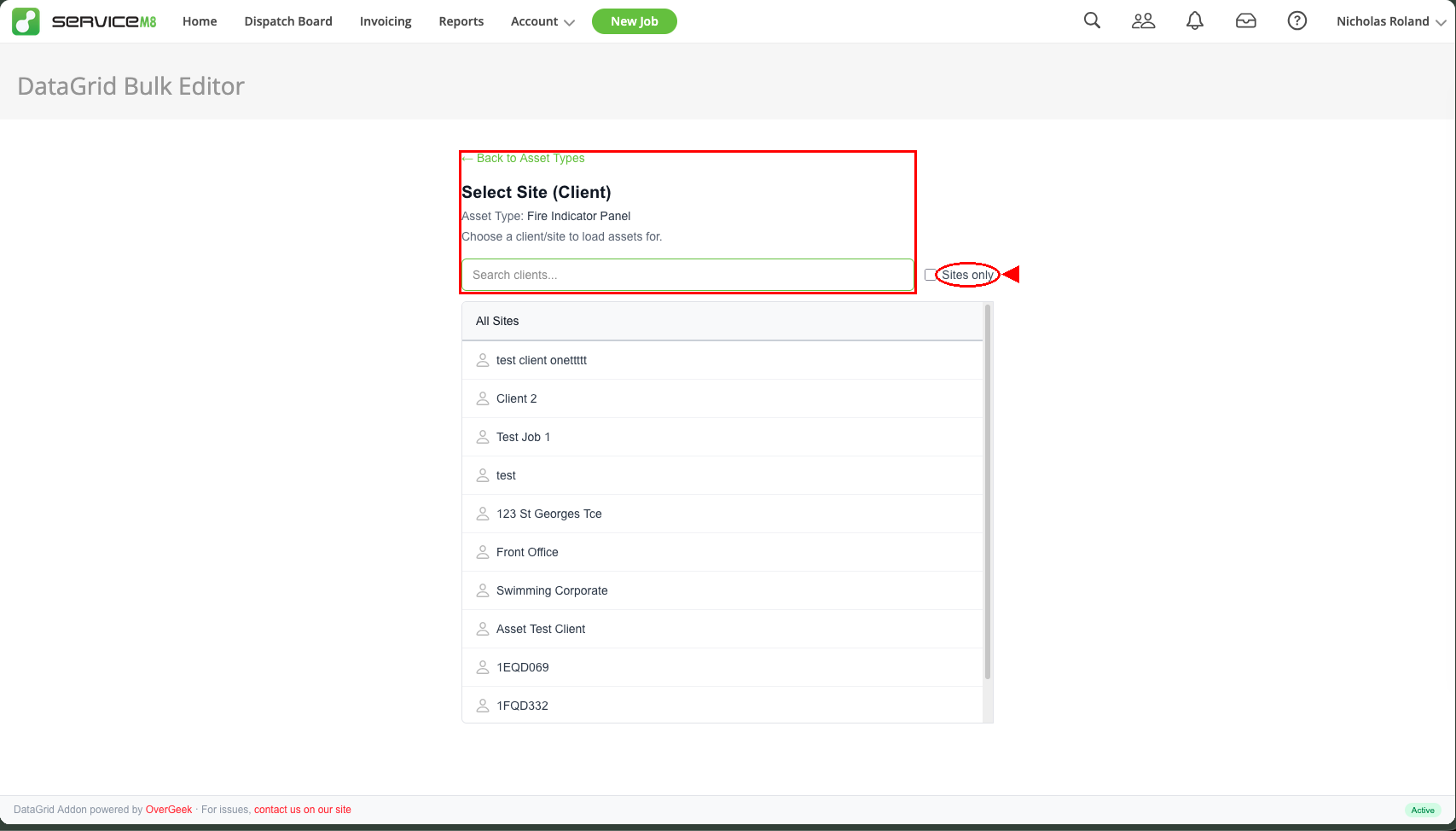
After choosing an asset type, you'll be asked to pick a client or site. Search by name, or tick Sites only to filter out individual clients and show just site locations. Click a site to load its assets.
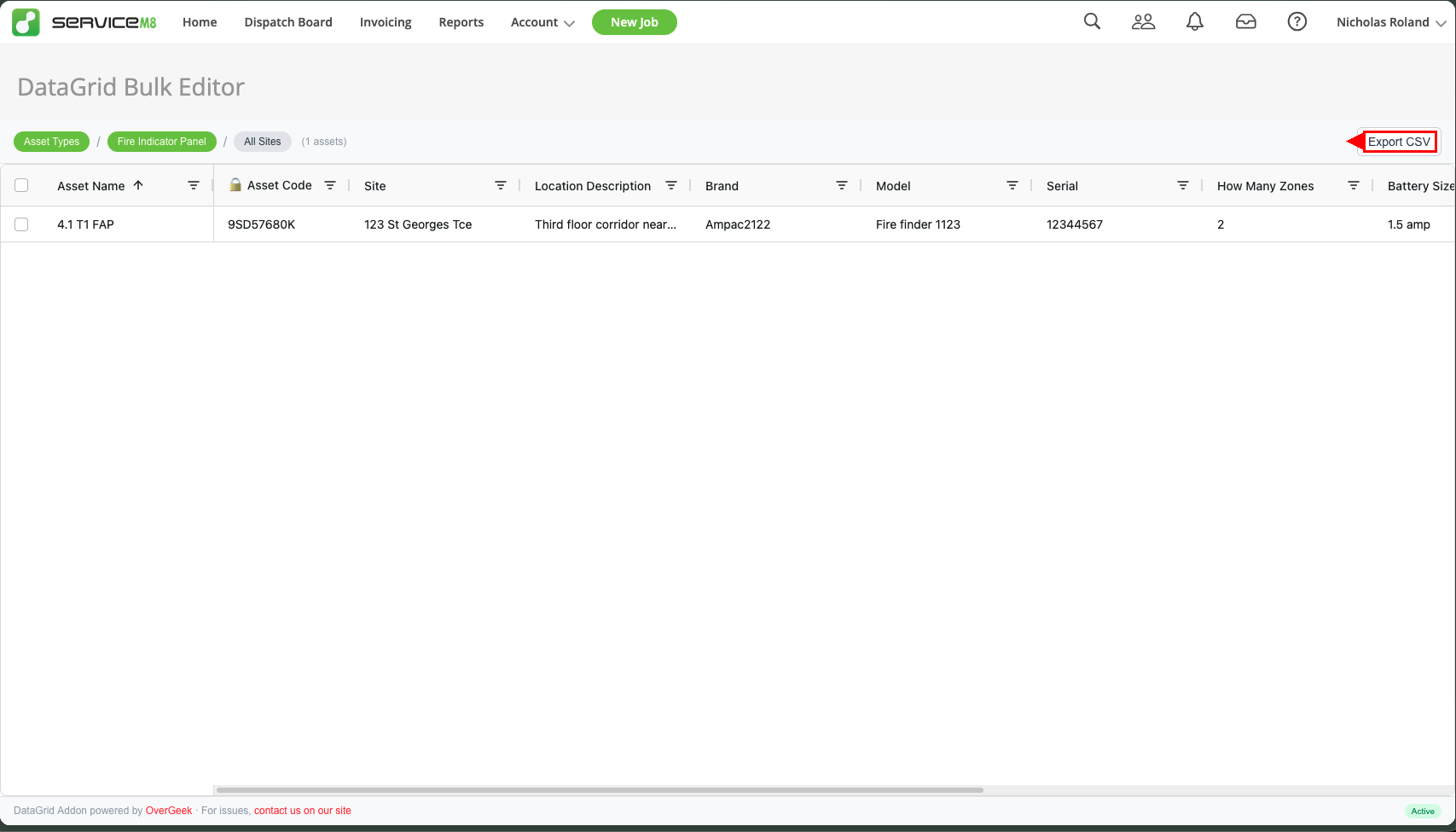
Viewing assets
All assets for the selected site and type are displayed in a familiar spreadsheet layout. Each row is an asset. Each column is a field: asset name, asset code, site, location, brand, model, serial, plus any other fields configured for that asset type.
Editing a field
Click any cell to edit it directly. The cell highlights and you can type a new value. You can also select multiple rows using the checkboxes, or shift-click to select a range and edit them all at once. When you've made changes, a notification appears at the bottom showing how many unsaved changes you have, with Discard and Save All buttons.
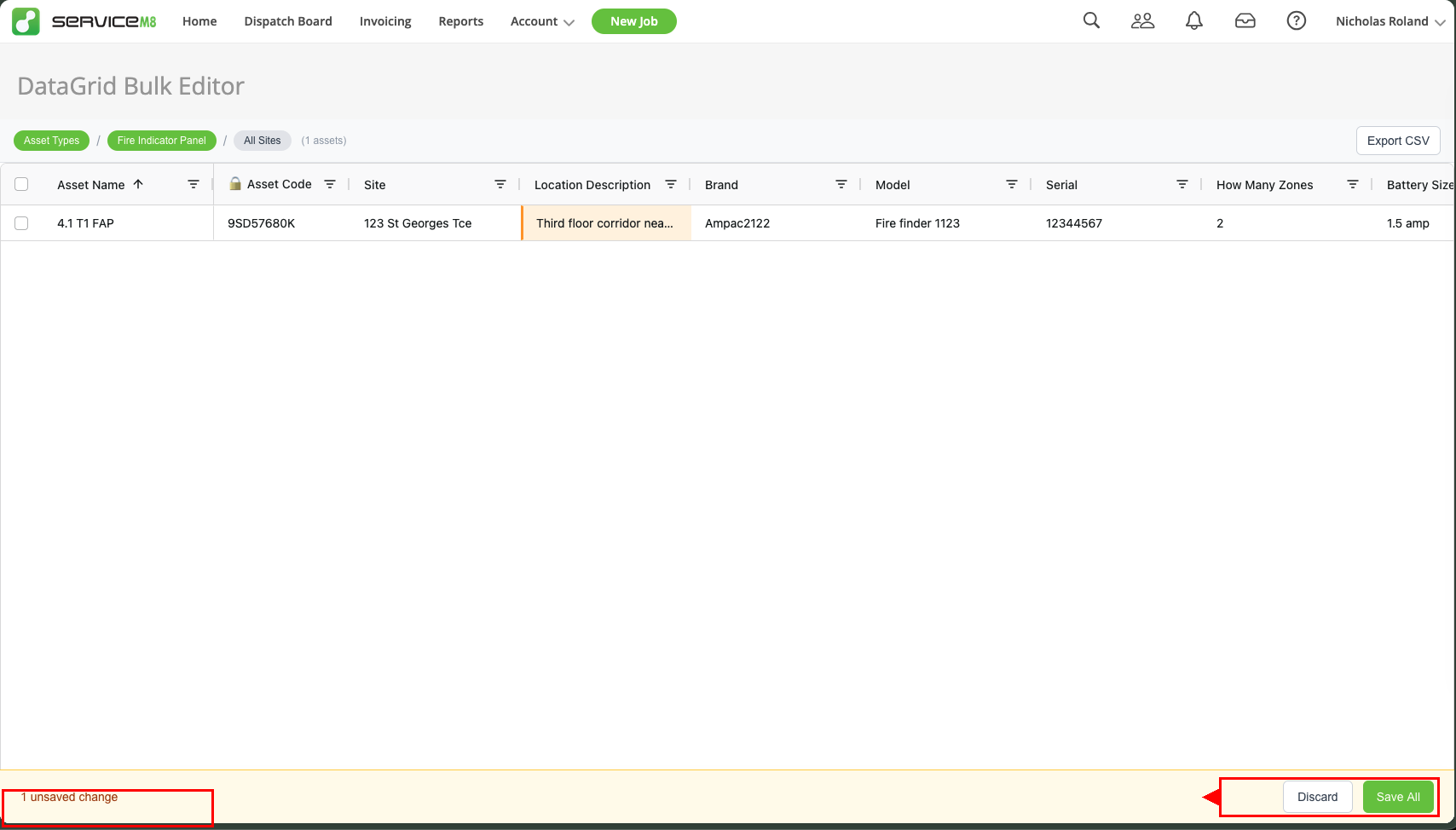
Click Save All to push your changes back to ServiceM8, or Discard to undo them.
Managing Clients NEW
The new Clients view gives you the same spreadsheet experience for your entire client database. Edit names, ABNs, addresses, contact details, billing addresses, payment terms, badges, and parent sites, all in one place.
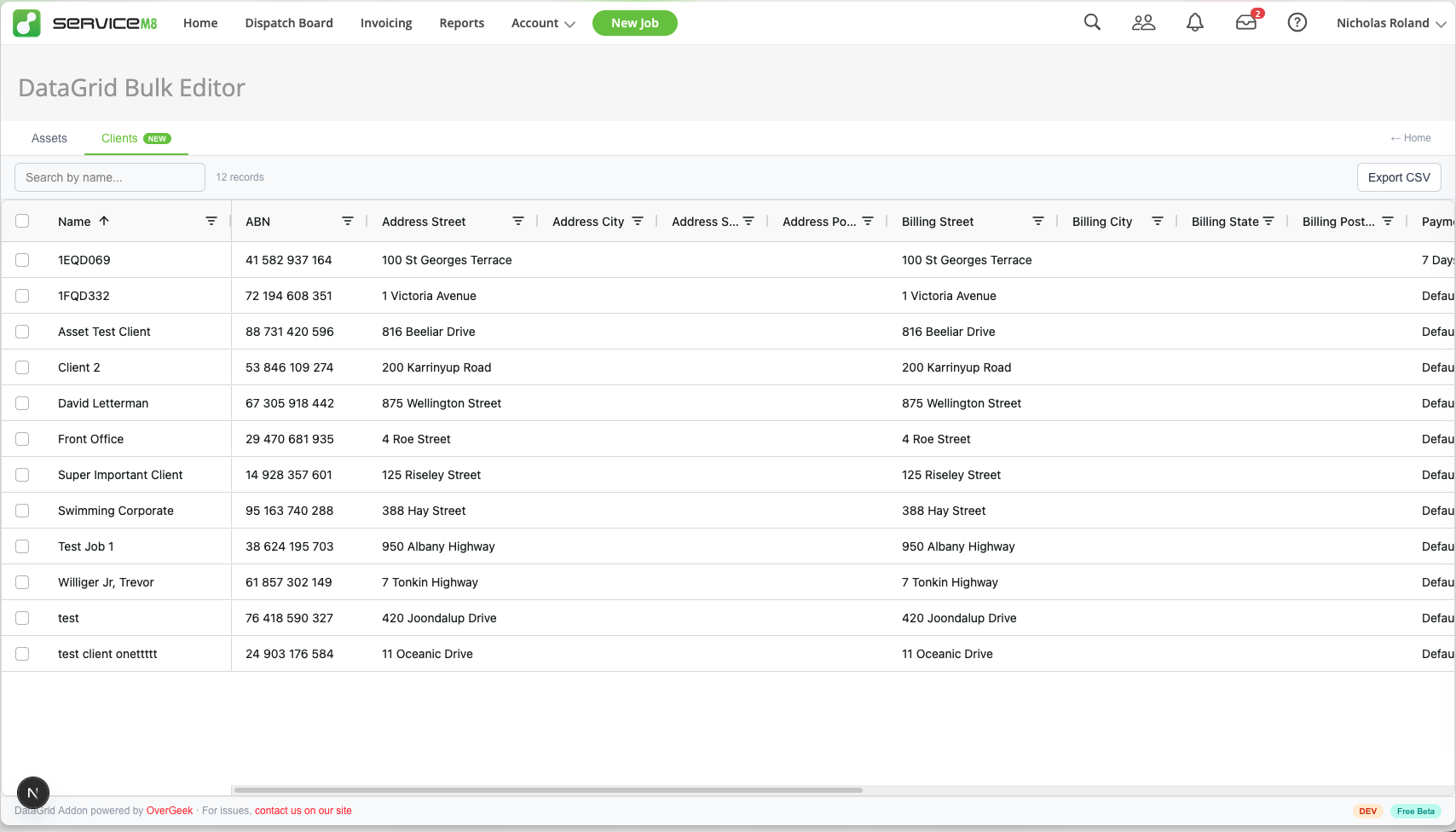
Use the search bar to find a specific client by name. Just like with assets, click any cell to edit it, select multiple rows with checkboxes or shift-click, and hit Save All when you're done. Use Export CSV to download your full client list.
Power Features
Paste from Excel or Numbers
Copy a range of cells from Excel, Google Sheets, or Numbers. Click a cell in DataGrid and press Ctrl+V (or ⌘V on Mac). DataGrid fills the cells across multiple rows and columns automatically. No browser permission popups.
Undo (Ctrl+Z / ⌘Z)
Made a mistake? Press Ctrl+Z (or ⌘Z on Mac) to step back through your edits, pastes, and bulk changes. Up to 100 actions are tracked, so you can roll back before saving.
Auto-number
Need to assign sequential names like Asset 001, Asset 002, Asset 003? Select the rows you want to number, then use the auto-number tool to set a start value, step, prefix, suffix, and padding. Applied in one click.
Prepend & Append
Add a prefix or suffix to existing values without overwriting them. Handy for renaming a batch of items, like adding a site code in front of asset names, or tagging records with a year suffix.
Exporting to CSV
Click the Export CSV button in the top right corner of any grid (assets or clients). This downloads a CSV file containing all the data currently displayed. Open it in Excel, Google Sheets, or any spreadsheet app.
Tips
- Use the Home link at the top to switch between Assets and Clients without reloading
- The grid shows all fields available. Scroll right if you have many custom fields or address columns
- Select multiple rows with checkboxes or shift-click to select a range, then edit a field to apply the change across all selected rows
- Changes are only saved when you click Save All. You can safely edit multiple cells, paste, undo, and bulk-update before committing
- Ctrl+Z (or ⌘Z) is your friend. Step back up to 100 actions
- Export is great for reporting, audits, or keeping an offline backup of your asset register or client list
- DataGrid works best on desktop for the full spreadsheet experience
Need Help?
If you run into any issues or have questions, get in touch and we'll sort you out.